Definitions
Meanings, pronunciation, and cultural context for important words.

 iTaukei Knowledge Archive
iTaukei knowledge archive
Explore Fijian language, ceremonies, provinces, protocol, and cultural resources in a cleaner archive designed for focus, respect, and repeat learning.
Archive pathways
88+ cultural terms and growing
Begin
Meanings, pronunciation, and cultural context for important words.
Ceremonies, practices, and shared ways of remembering.
Yasana, places, identities, and local cultural knowledge.
Respectful conduct for gatherings, ceremonies, and visits.
Sayings, expressions, and the wisdom carried in language.
Longer resources on cultural items, customs, and relationships.
Learn
Explore common ceremonial and cultural terms used in Fijian traditions.
Literally “wiping of soot or dirt”; a ceremonial feast held by a host to thank those involved in a task or obligation.
Learn more
Atonement.
Learn more
Traditional warrior; also refers to a social unit responsible for defending a chief.
Learn more
Traditional Fijian priest.
Learn more
Language Guide
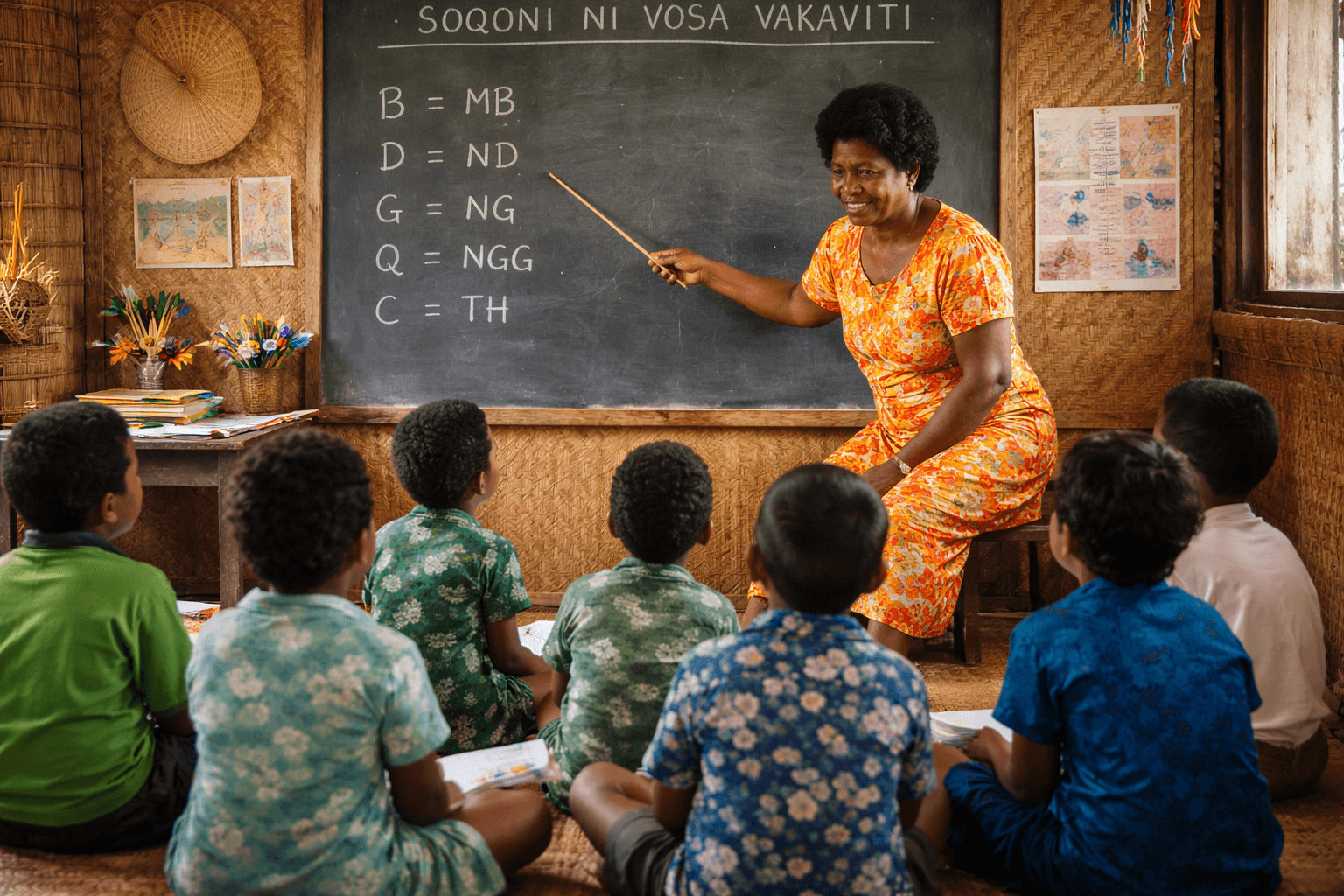
This alphabet is based on the Roman alphabet but assigns different sound values to certain letters:
b
mb
b = mb (like member)
d
nd
d = nd (like sandy)
g
ng
g = ng (like singer)
q
ngg
q = ngg (like hunger)
c
th
c = th (like then)
The written form of the Fijian language is mainly based on the Bauan dialect, which is the standard form used across the islands. There are two writing systems:
a phonetic system (rarely used today), and
the modern alphabet system developed in the 1830s by missionary David Cargill.
This alphabet is based on the Roman alphabet but assigns different sound values to certain letters:
Fijian vowels are pronounced clearly, similar to Spanish or Italian, and the letter r is rolled.
In most words, the stress falls on the second-to-last syllable.
The spelling system may look unusual at first, but it is logical and efficient once learned. It uses single letters to represent sound combinations, which was done intentionally for linguistic clarity—not by accident.
Wright, Ronald. On Fiji Islands. New York: Viking Penguin Inc., 1986.
App Preview
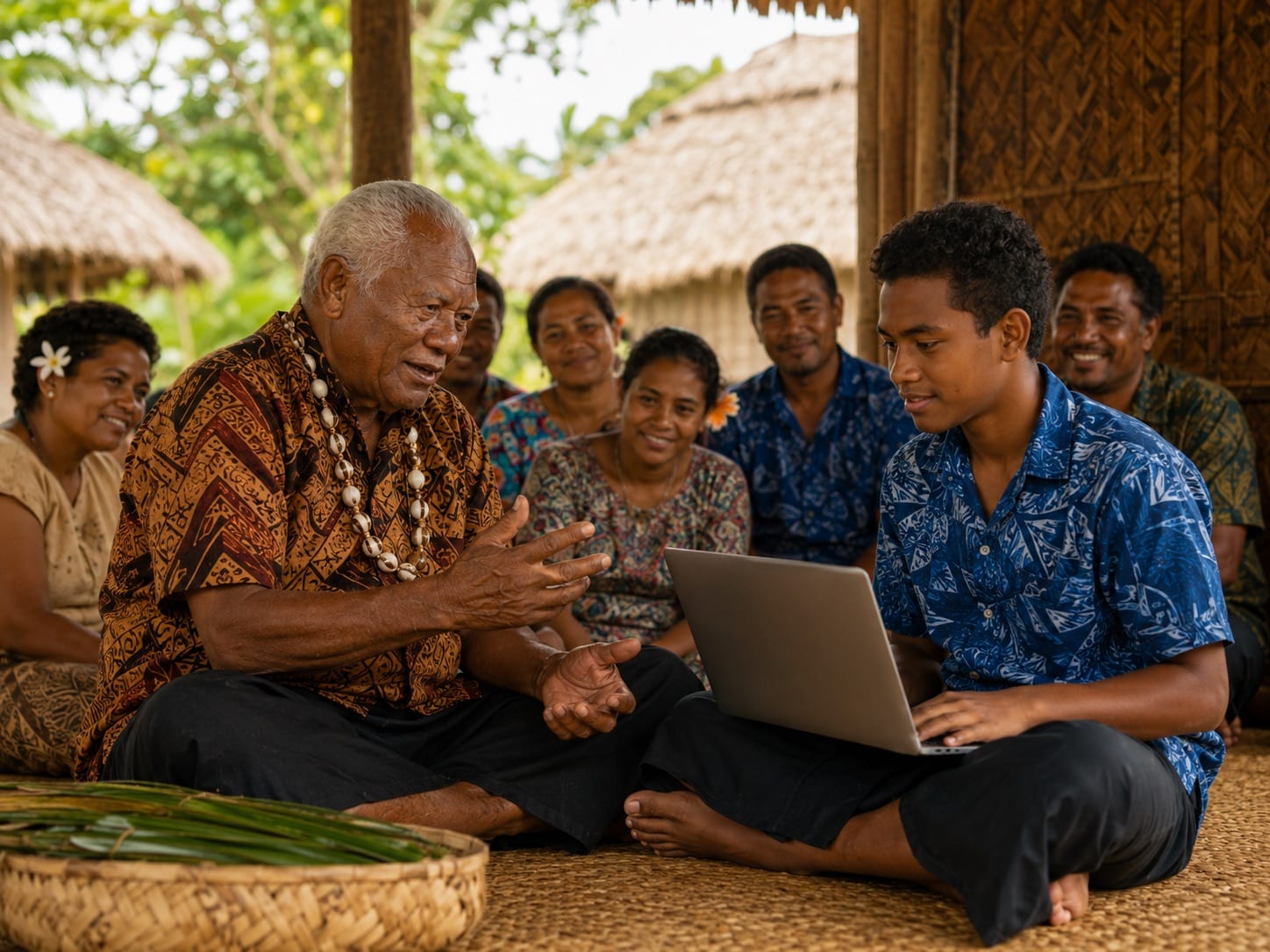
Qima Qama is being shaped into a mobile companion for quick reference, pronunciation, ceremony notes, and slower cultural learning wherever you are.
How the earliest settlers moved across the Pacific and how Fiji became part of that story.
Scroll to continue
The earliest settlers of the Pacific were Melanesian peoples, often referred to in older texts as “Papuans.” They were among the oldest human populations in the region and gradually moved through island chains near New Guinea and into parts of the wider Pacific.
Older descriptions often used outdated language. Today, these communities are more respectfully understood as part of the Melanesian heritage of the Pacific.
Wibberley, Leonard. Fiji: Islands of the Dawn. New York: Van Rees Press, 1964.
These early journeys were shaped by nature itself. Ocean currents acted like invisible pathways, winds pushed rafts and canoes across vast distances, and islands became stepping stones across an endless sea. The ocean did not just separate people. It guided them.
Wibberley, Leonard. Fiji: Islands of the Dawn. New York: Van Rees Press, 1964.
As early settlers moved eastward, Fiji became one of the last large island groups within reach. Beyond it lay vast stretches of open ocean, making further travel far more difficult without advanced navigation. For many early migrants, Fiji marked a natural stopping point.
Wibberley, Leonard. Fiji: Islands of the Dawn. New York: Van Rees Press, 1964.
Earlier interpretations sometimes tried to connect Fiji to places far beyond the Pacific. Modern research offers a clearer picture, but the older theory remains part of how people once tried to understand origins.
Wibberley, Leonard. Fiji: Islands of the Dawn. New York: Van Rees Press, 1964.
Historical Idea
Some early writers believed there were similarities between the people of Fiji and those of Tanganyika in East Africa. They pointed to language, customs, and traditions and wondered whether these distant cultures were somehow connected.
Current View
Today, research in anthropology, genetics, and linguistics shows that Pacific Islanders originated mainly from Southeast Asian and Melanesian populations. There is no strong evidence of a direct migration link between Fiji and East Africa.
The story of origins in the Pacific is a story of movement, adaptation, and interpretation. Nature shaped where people could go. Islands shaped where they stayed. And over time, different generations tried to explain what they saw. Fiji stands at the meeting point of migration, environment, and identity.
Origins is not just a story about where people came from. It is also a story about how the Pacific shaped human life.
Wibberley, Leonard. Fiji: Islands of the Dawn. New York: Van Rees Press, 1964.
Explore
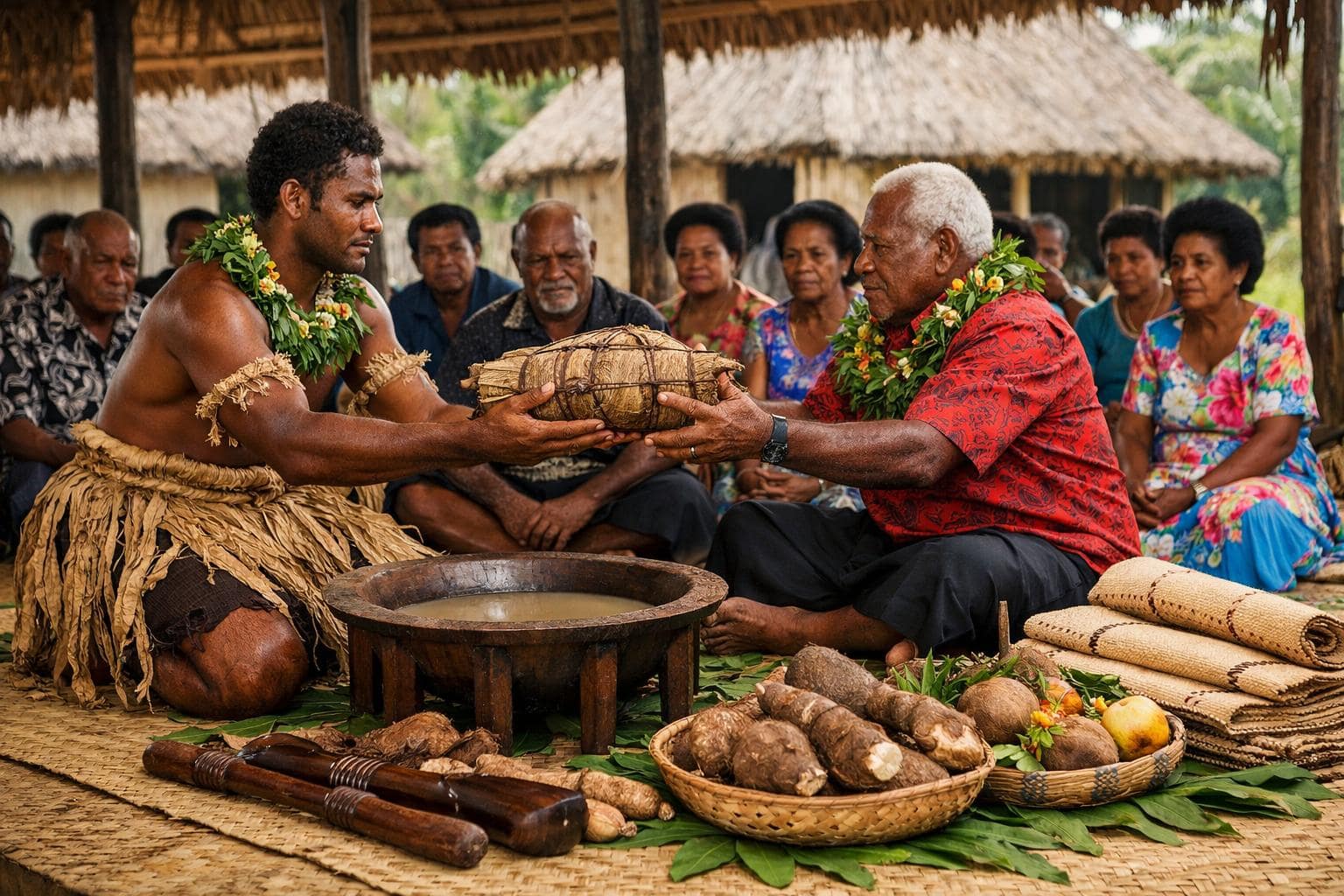
A ceremonial presentation used to show respect and seek welcome when entering a place or gathering.
Learn more
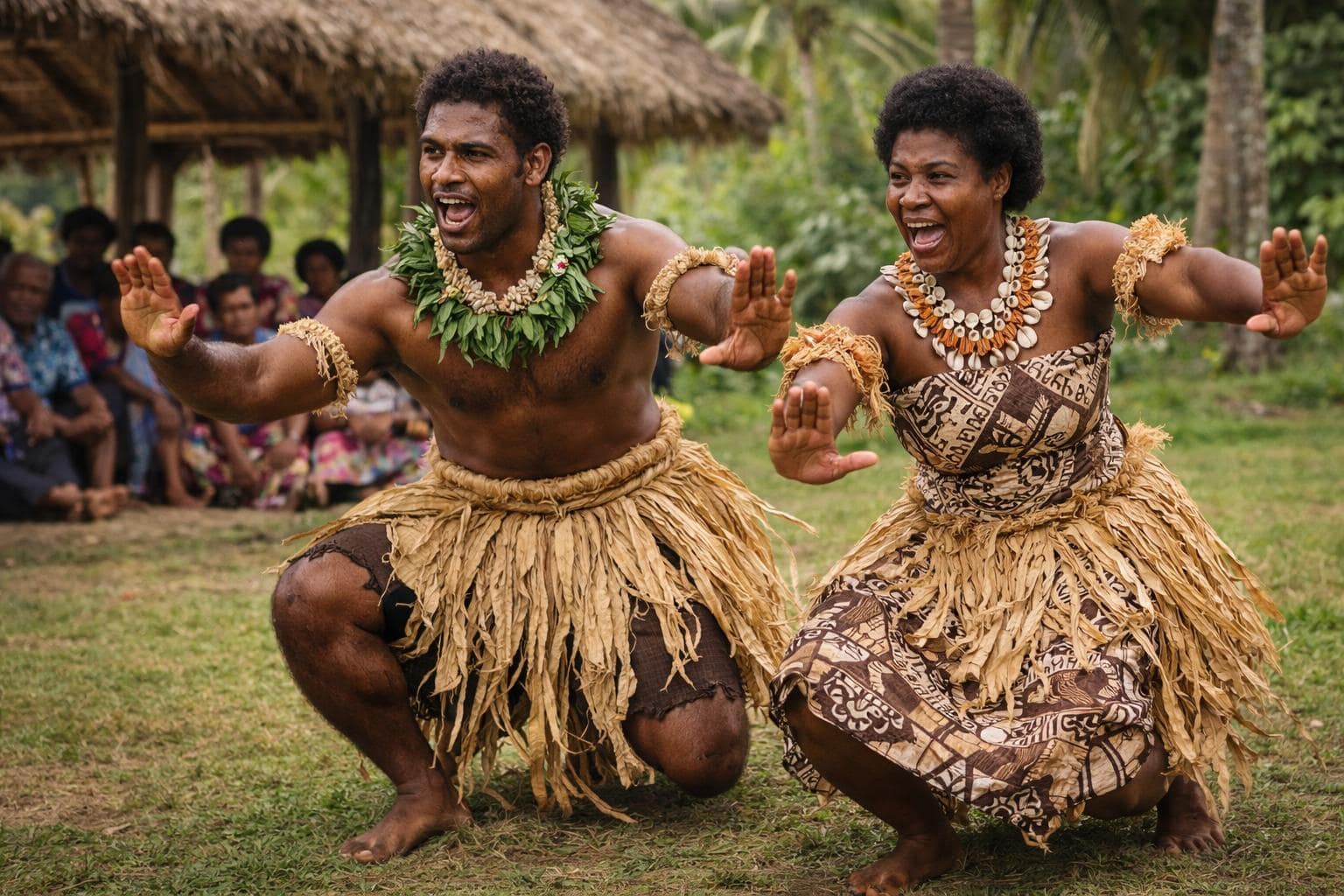
A traditional form of storytelling through movement, chanting, and cultural performance.
Learn more
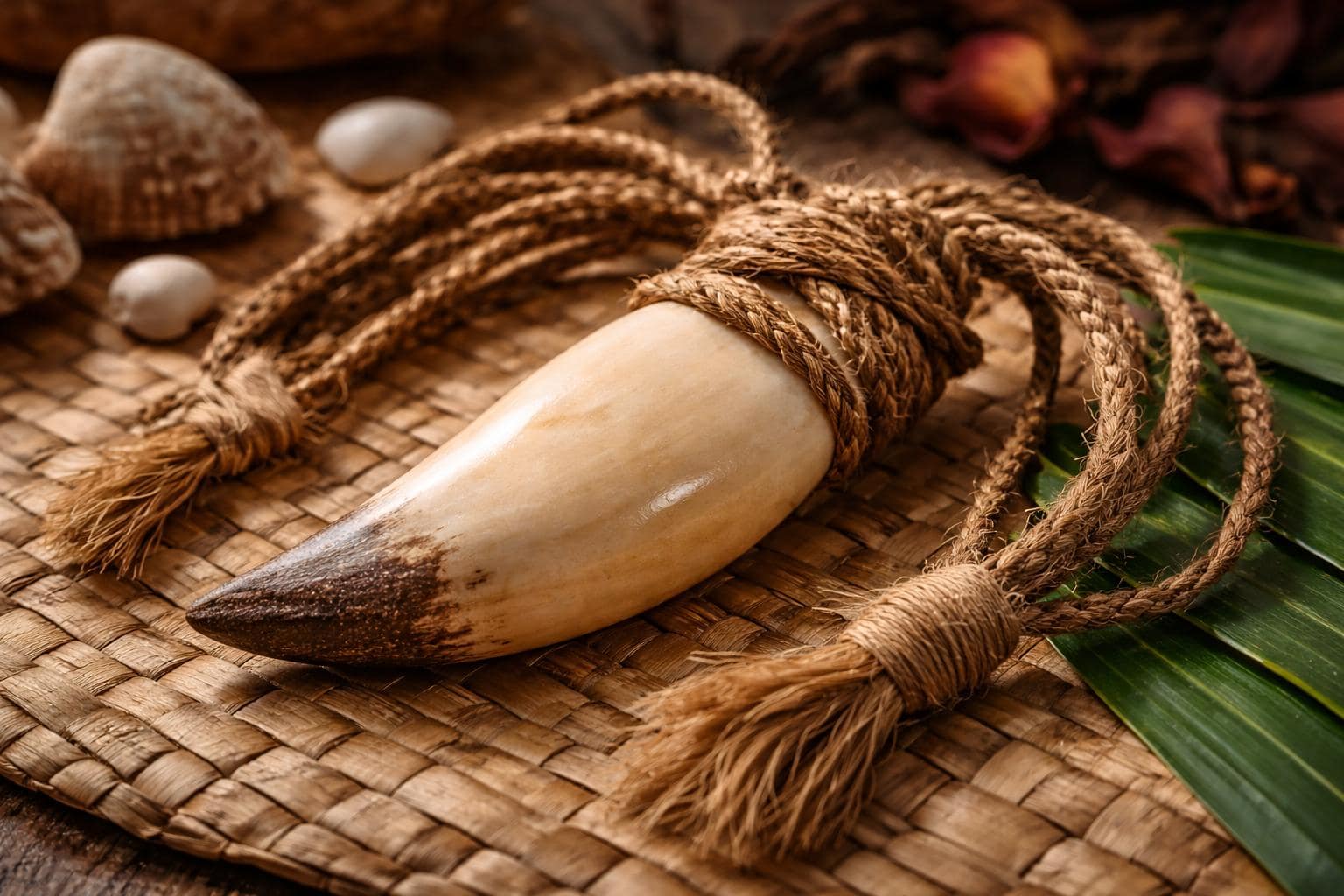
A sacred and symbolic cultural item used in ceremonies such as reconciliation, marriage, and chiefly presentation.
Learn more